Chronoliths
Between the Great Silences
The implacable stones of the Palaeolithic and Neolithic—
they have long haunted my thinking about matter, ideas, time.
Around them: marks, carvings, fragments.
Mute. Ambiguous. Unresolved.
A dreamland of the real.
Chronoliths takes shape in this absence.
Stones inhabiting unmoored time.
Our deepest history.
Our barely imaginable future.
We have no idea what any of it means.
and yet.
Each of the following pieces is accompanied by a sonic artefact,
and by a document drawn from the research.
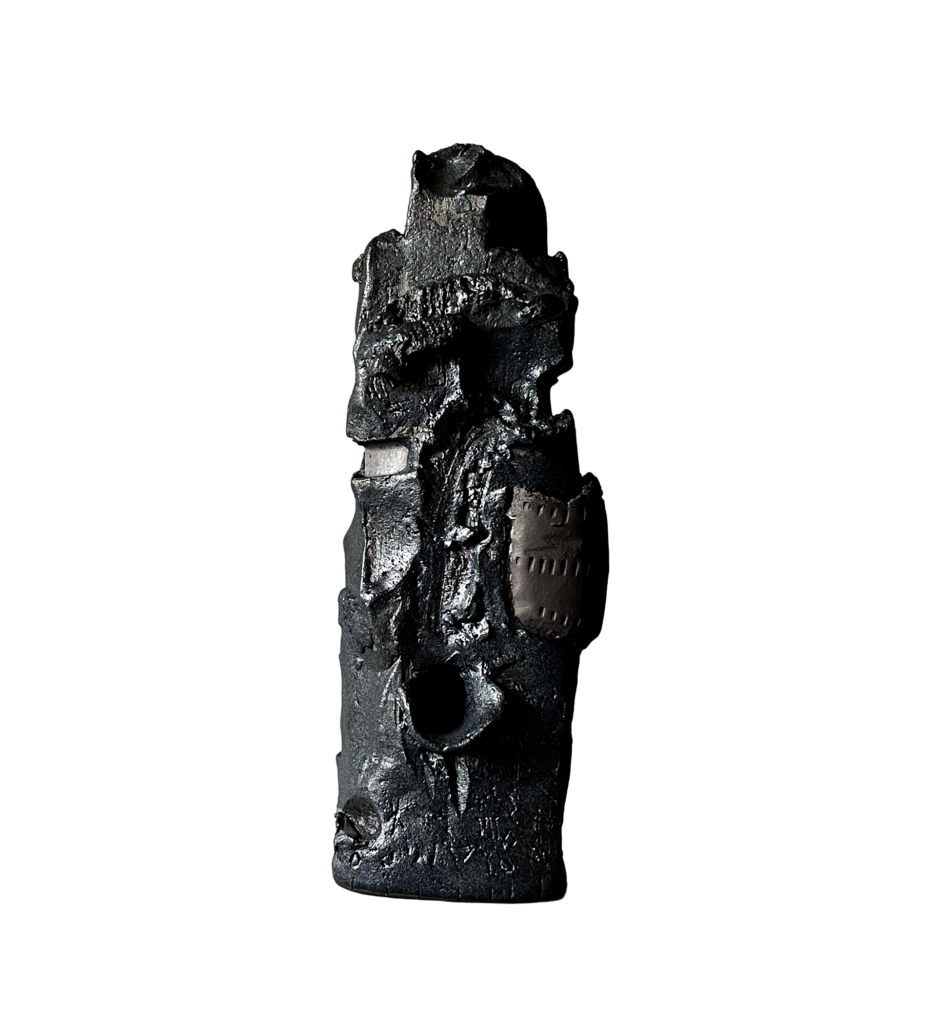
CHRONOLITH 01
Black stoneware
5.5 x 8.0 x 21.6 cm
View document
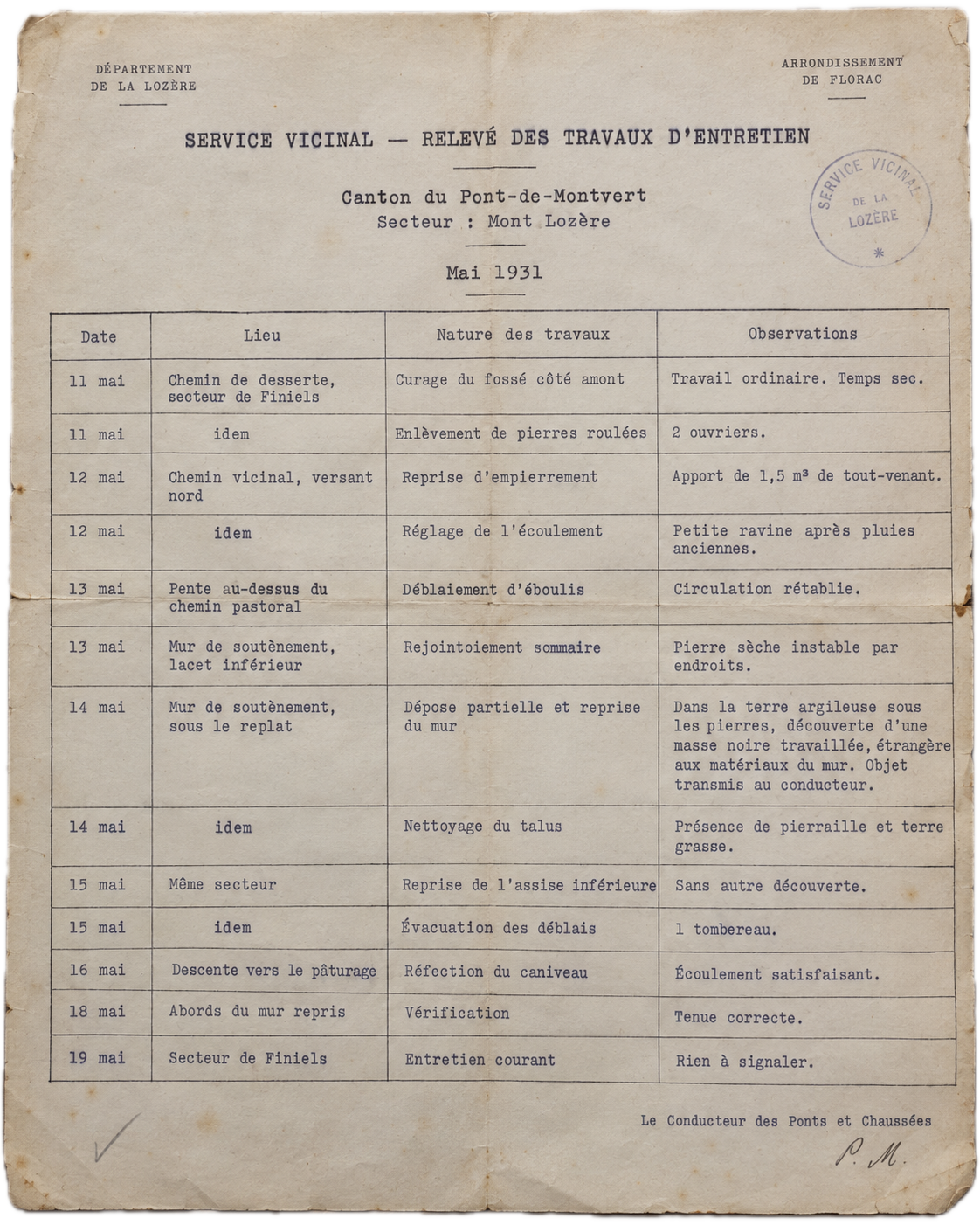
[A roadwork maintenance log describes a discovery on 14 May during routine work.]
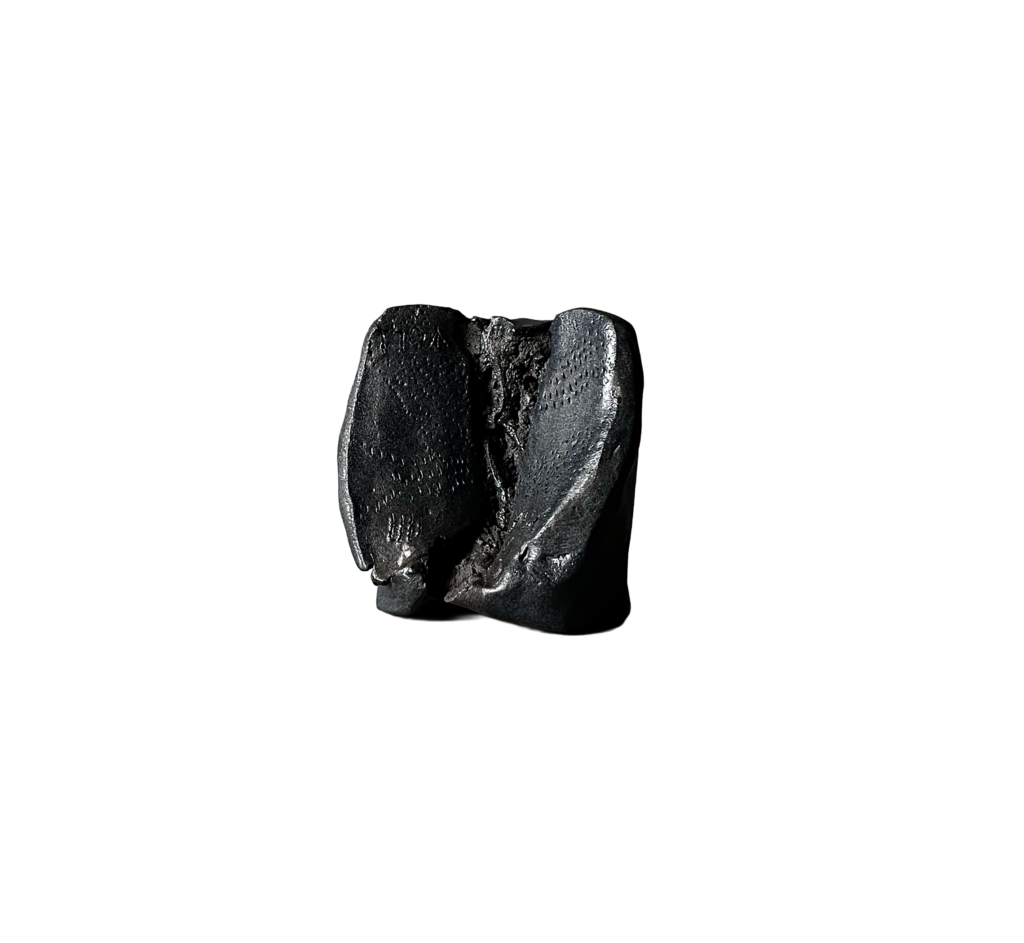
CHRONOLITH 02
Black stoneware
8.5 x 9.5 x 10.5 cm
View document
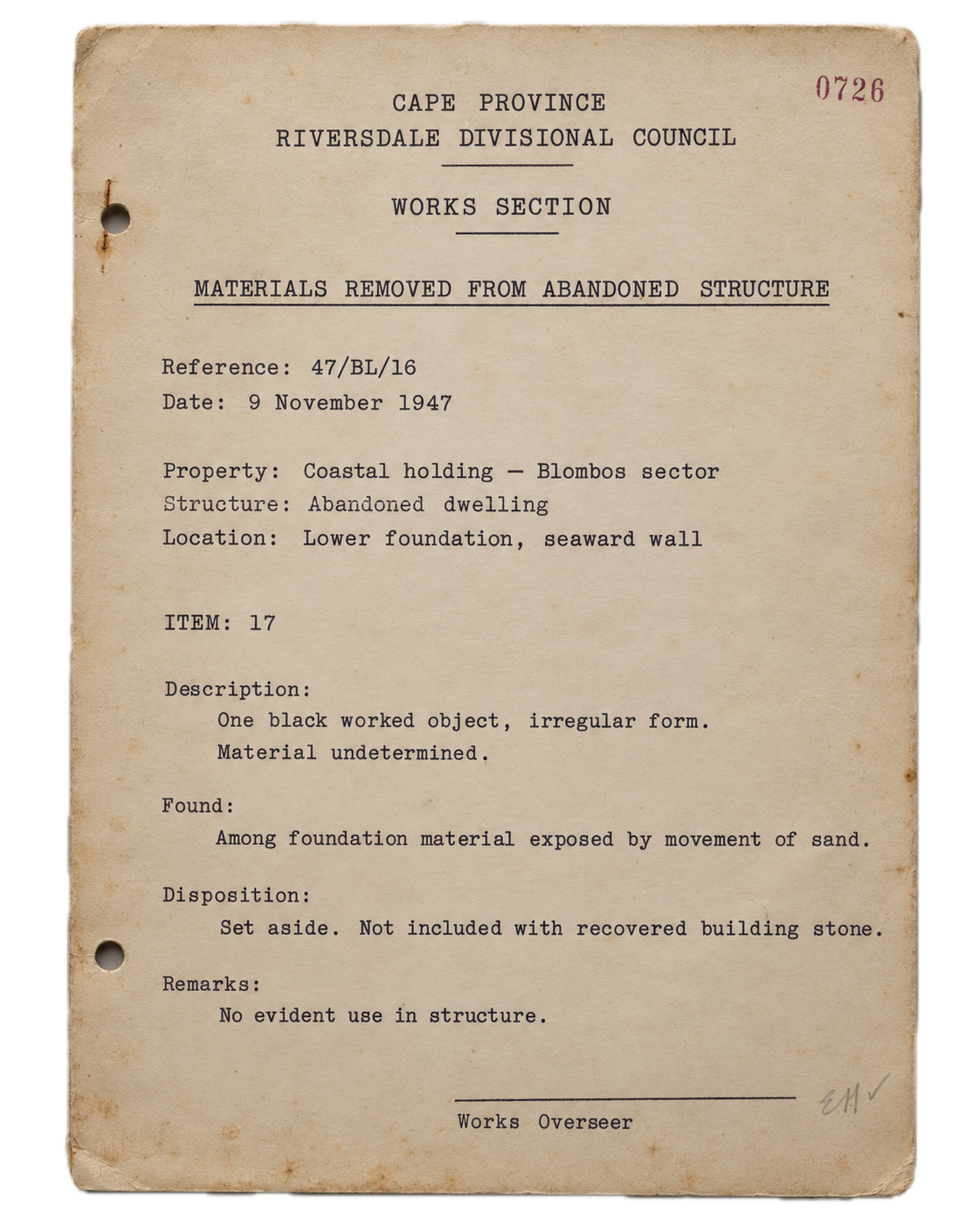
[a black object is recorded after being found during a building project.]
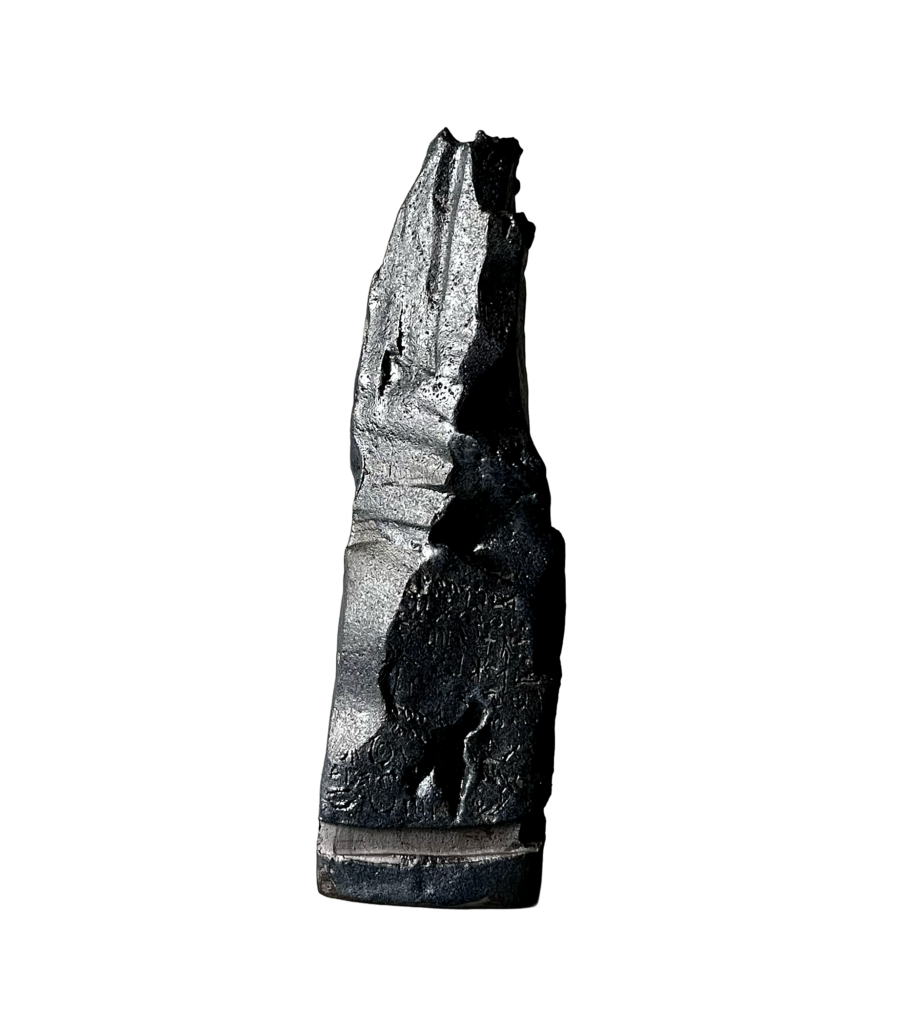
CHRONOLITH 03
Black stoneware
6.0 x 6.2 x 20.1 cm
View document
[a small notice in a local paper about the discovery of a ‘curious black object’.]
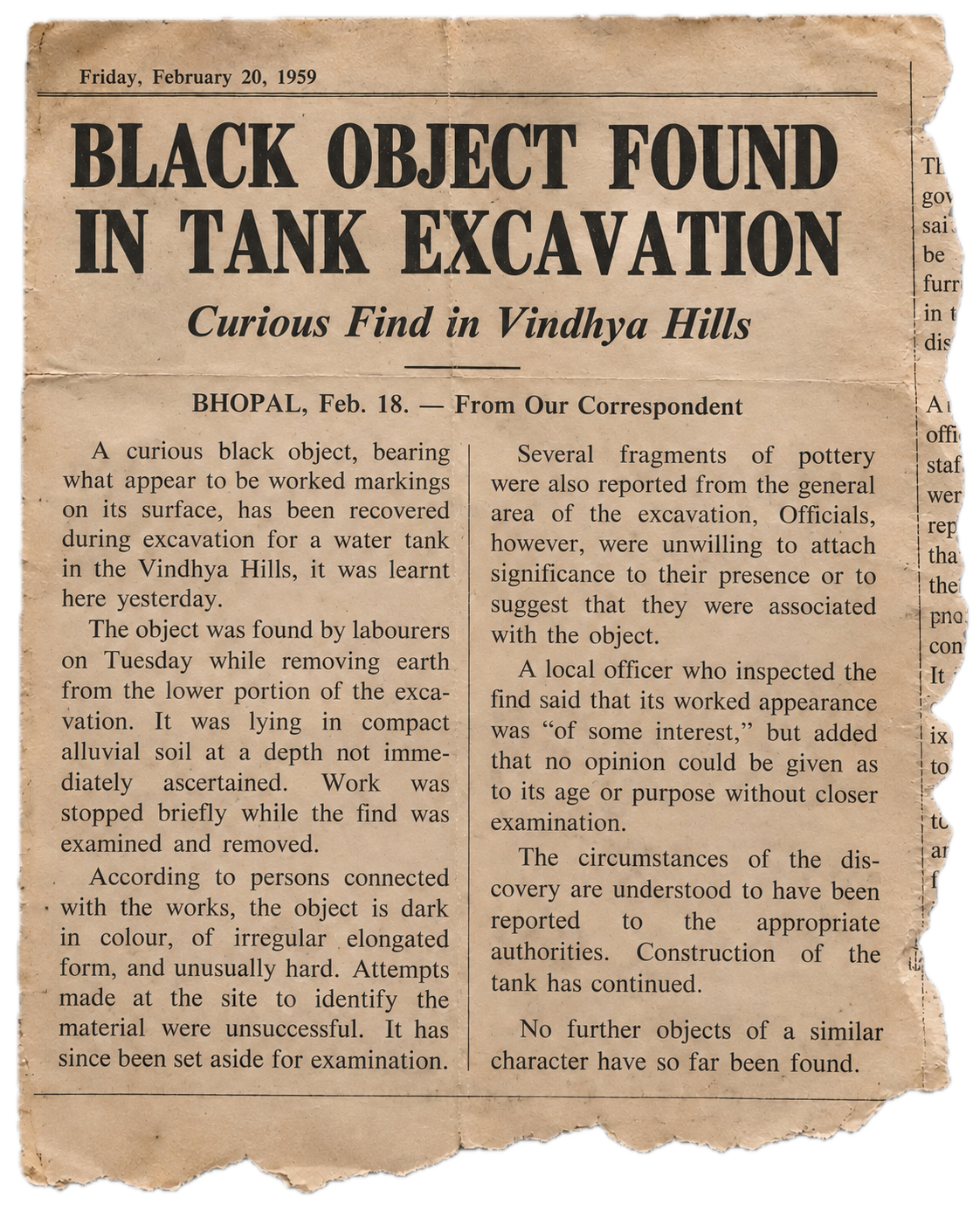
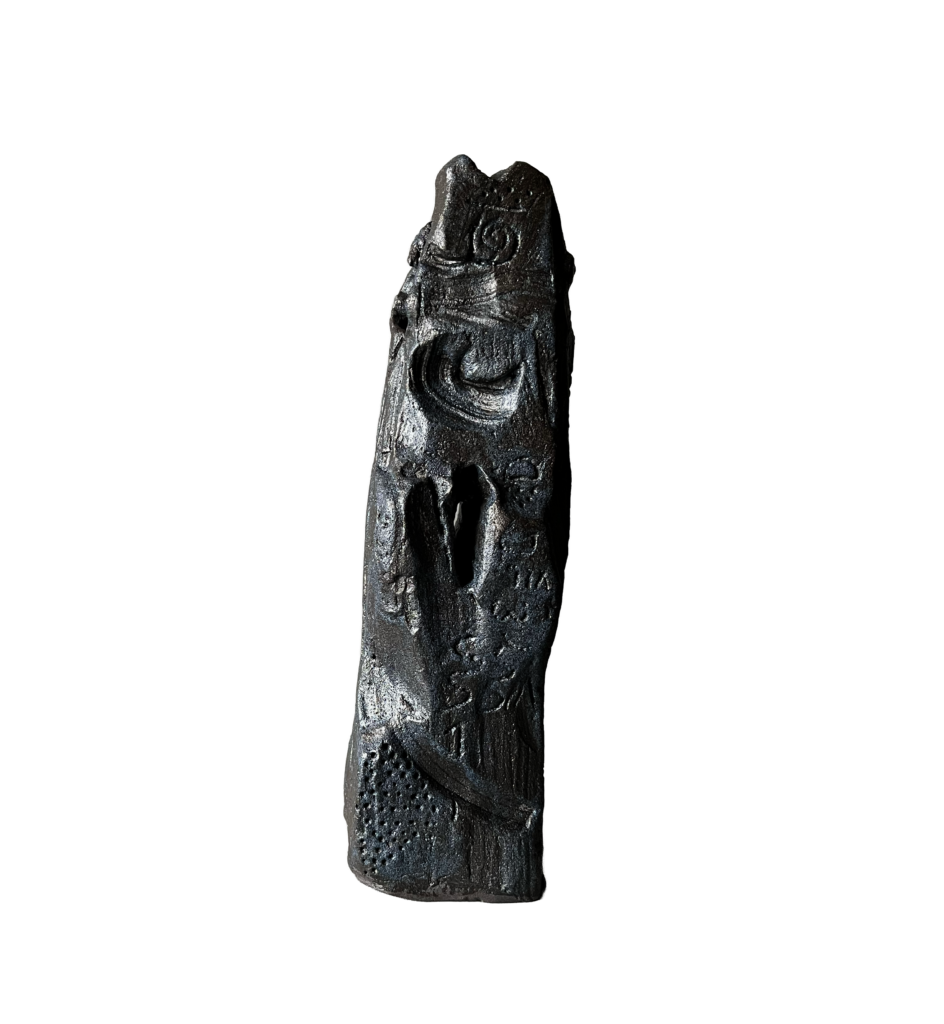
CHRONOLITH 04
Black stoneware
6.2 x 7.5 x 25.5 cm
View document
[investigation of a sinkhole near the Sulawesi caves reveals a benda hitam (a dark object).]
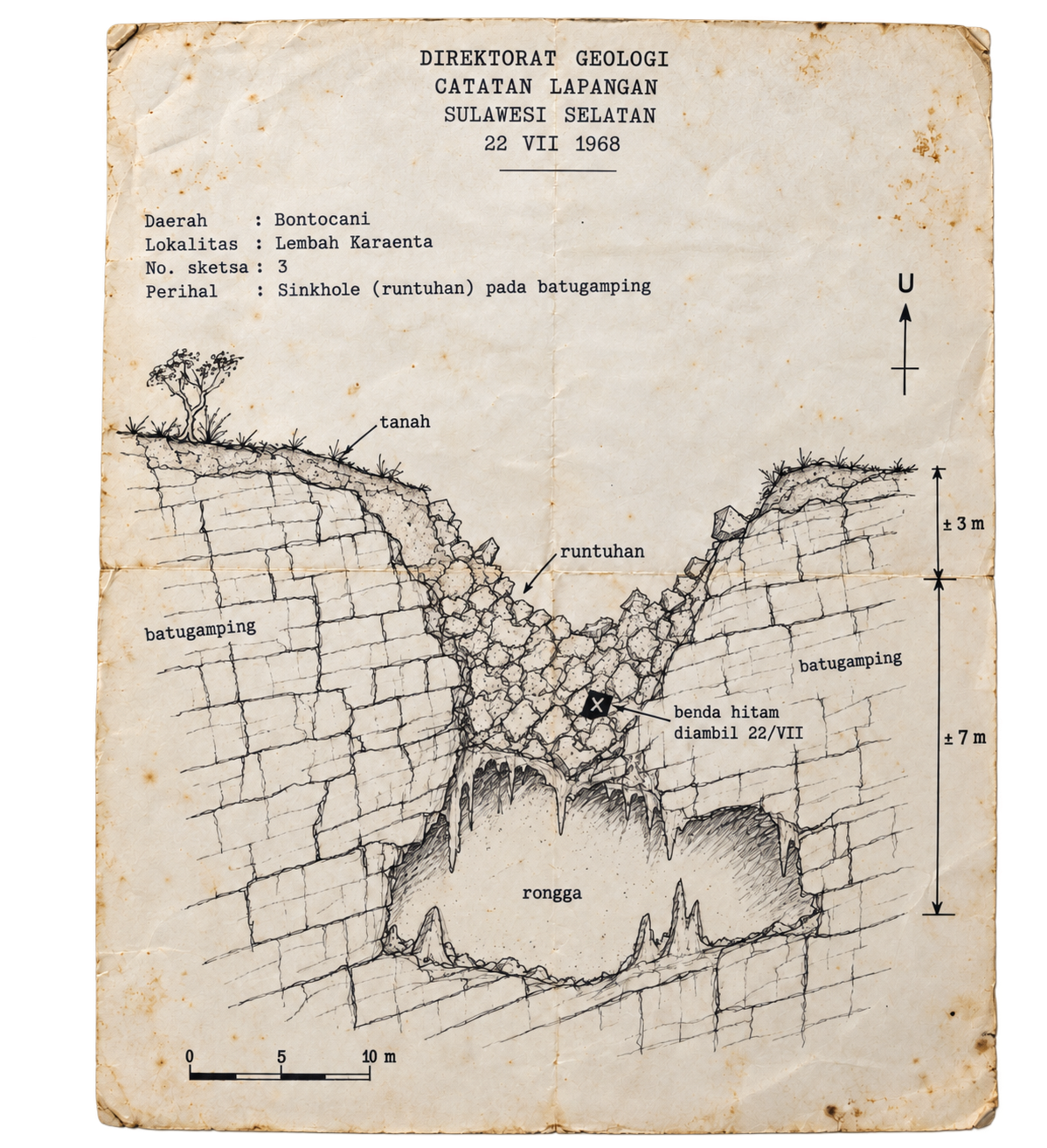
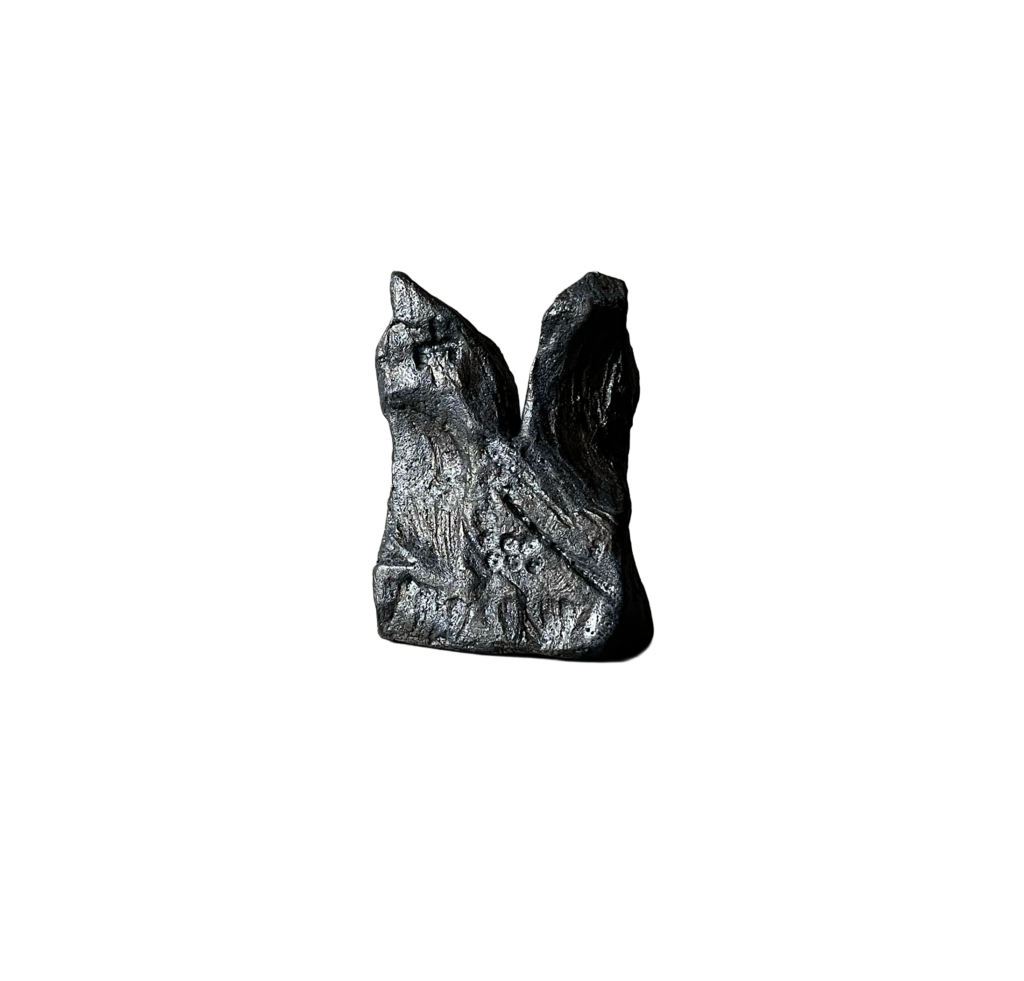
CHRONOLITH 05
Black stoneware
6.5 x 7.5 x 11.0 cm
View document
[from the Franco-Brazilian expedition in Piauí. The glycine envelope contains only slight remains of carbonaceous dust attributed to the found object.]
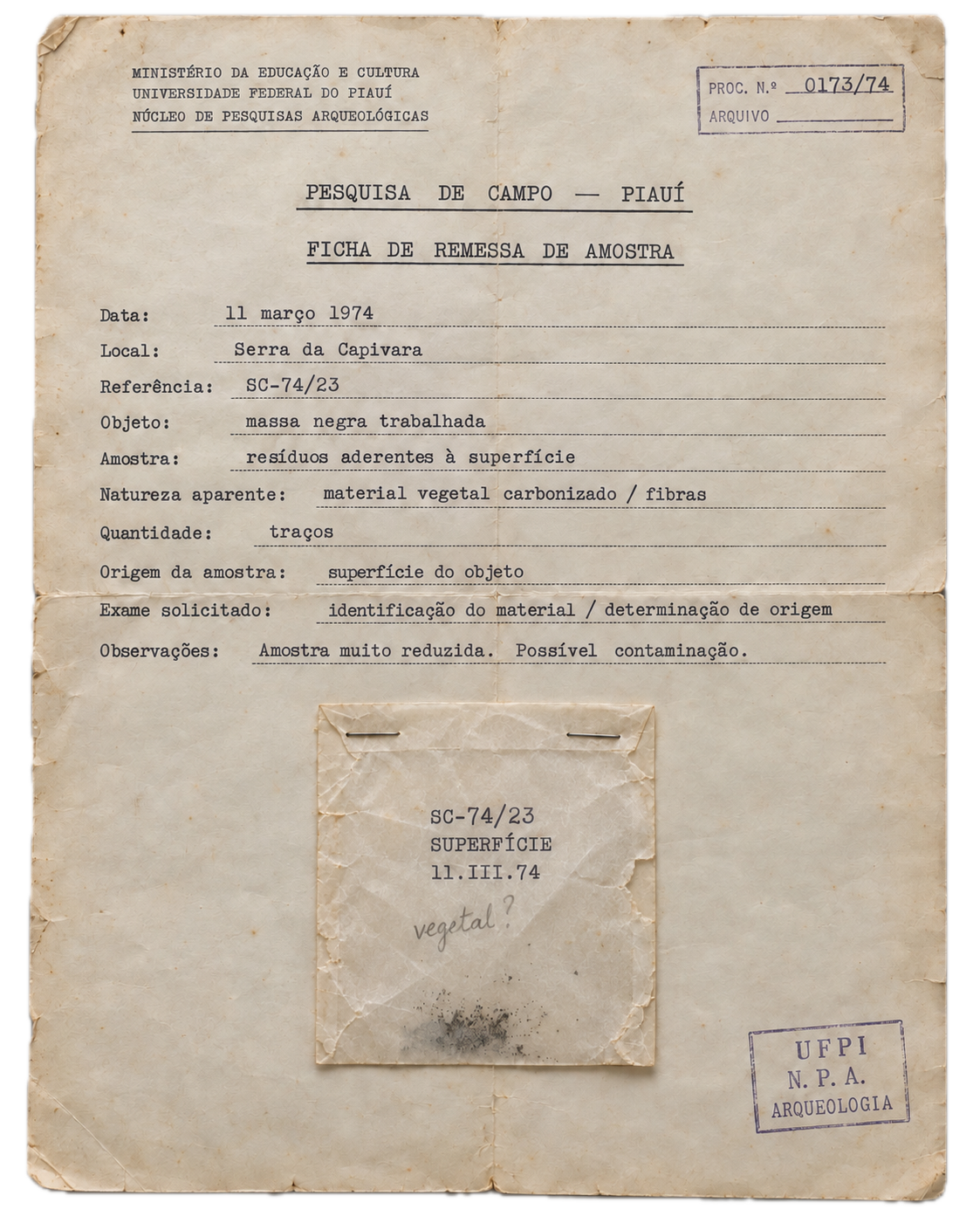
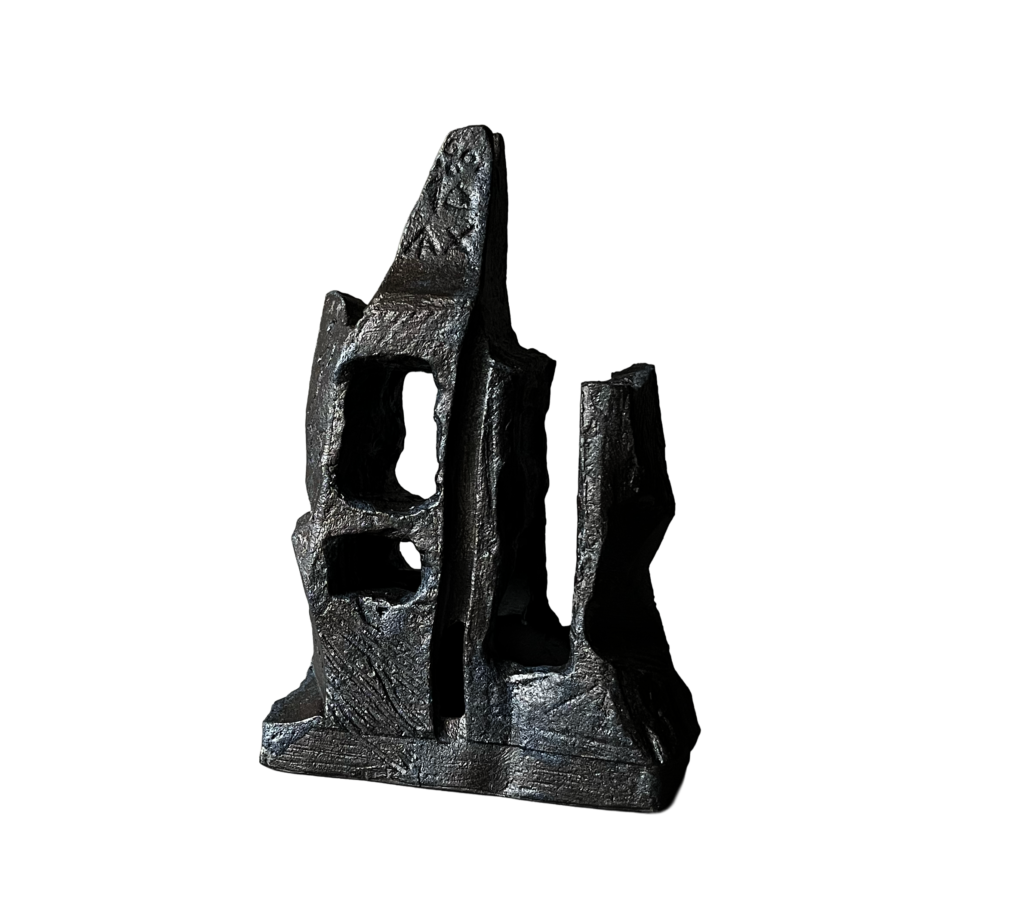
CHRONOLITH 06
Black stoneware
7.0 x 13.6 x 21.2 cm
View document
[a core sample record, noting the cessation of work when a black object was encountered.]
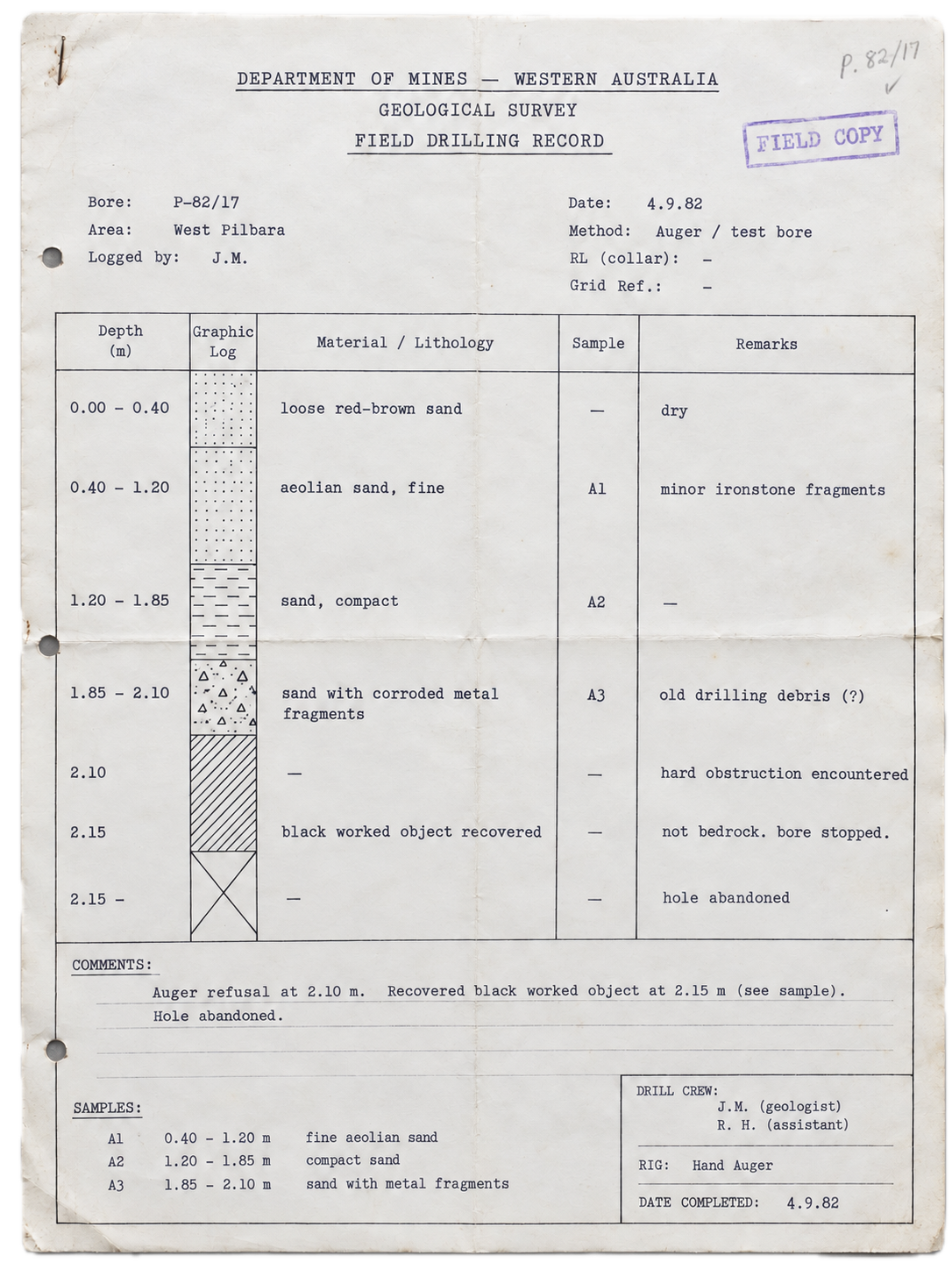
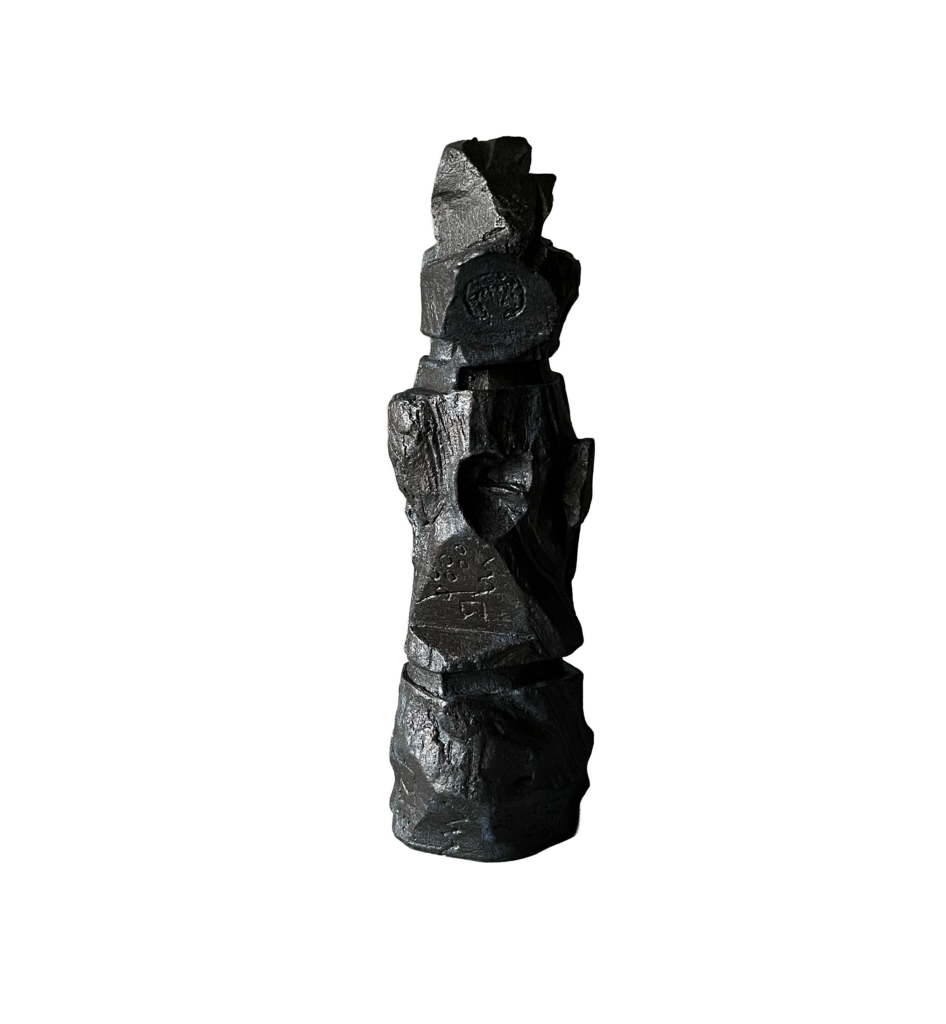
CHRONOLITH 07
Black stoneware
7.5 x 9.0 x 29.5 cm
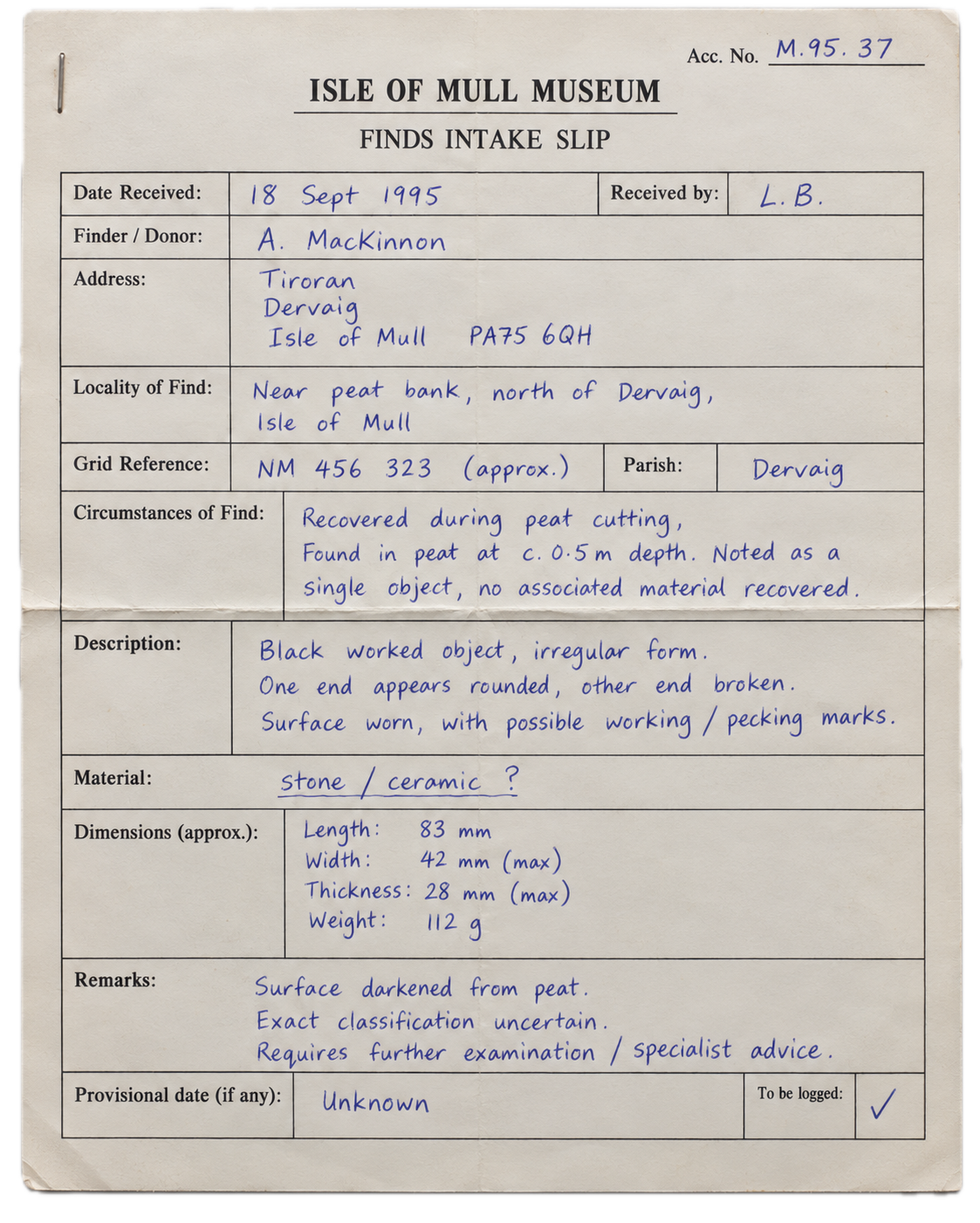
View document
[a donated ‘black worked object’ is entering a museum with uncertain classification.]
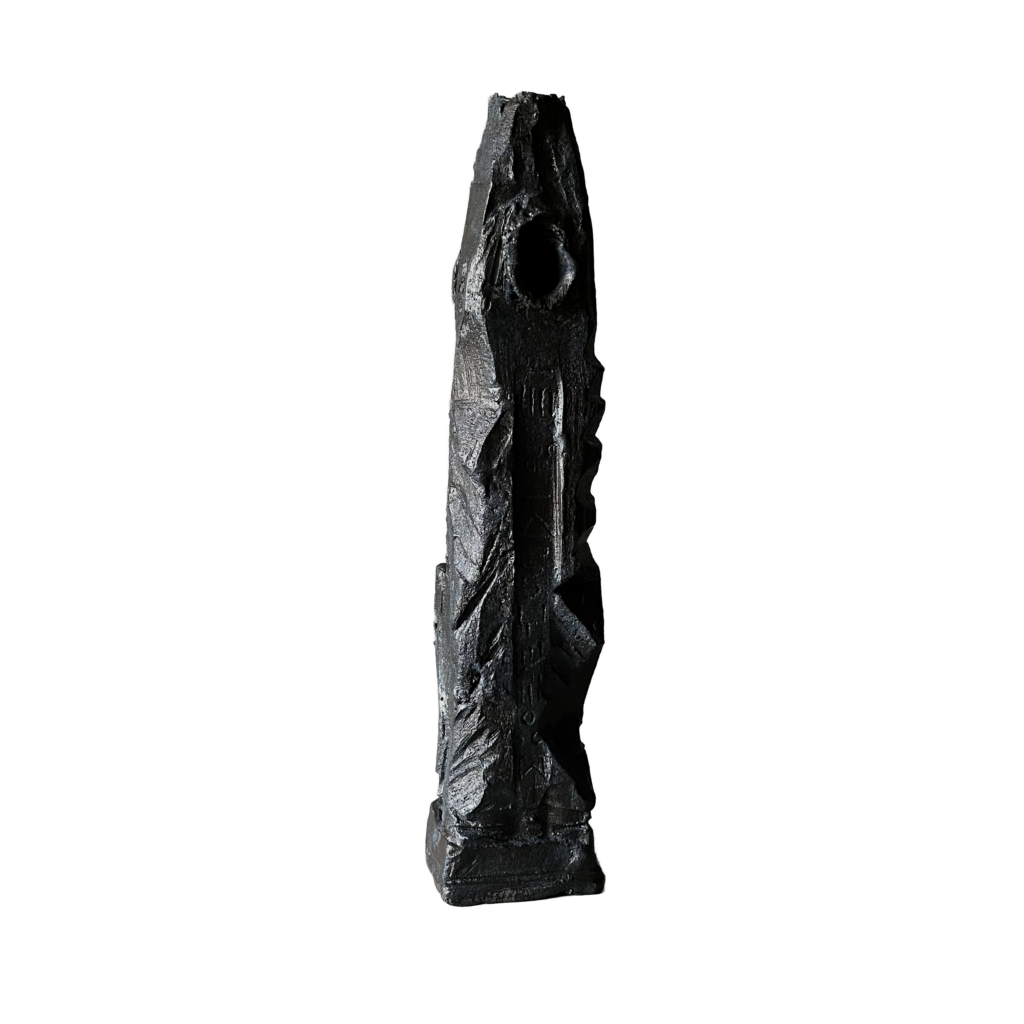
CHRONOLITH 08
Black stoneware
7.5 x 9.0 x 29.5 cm
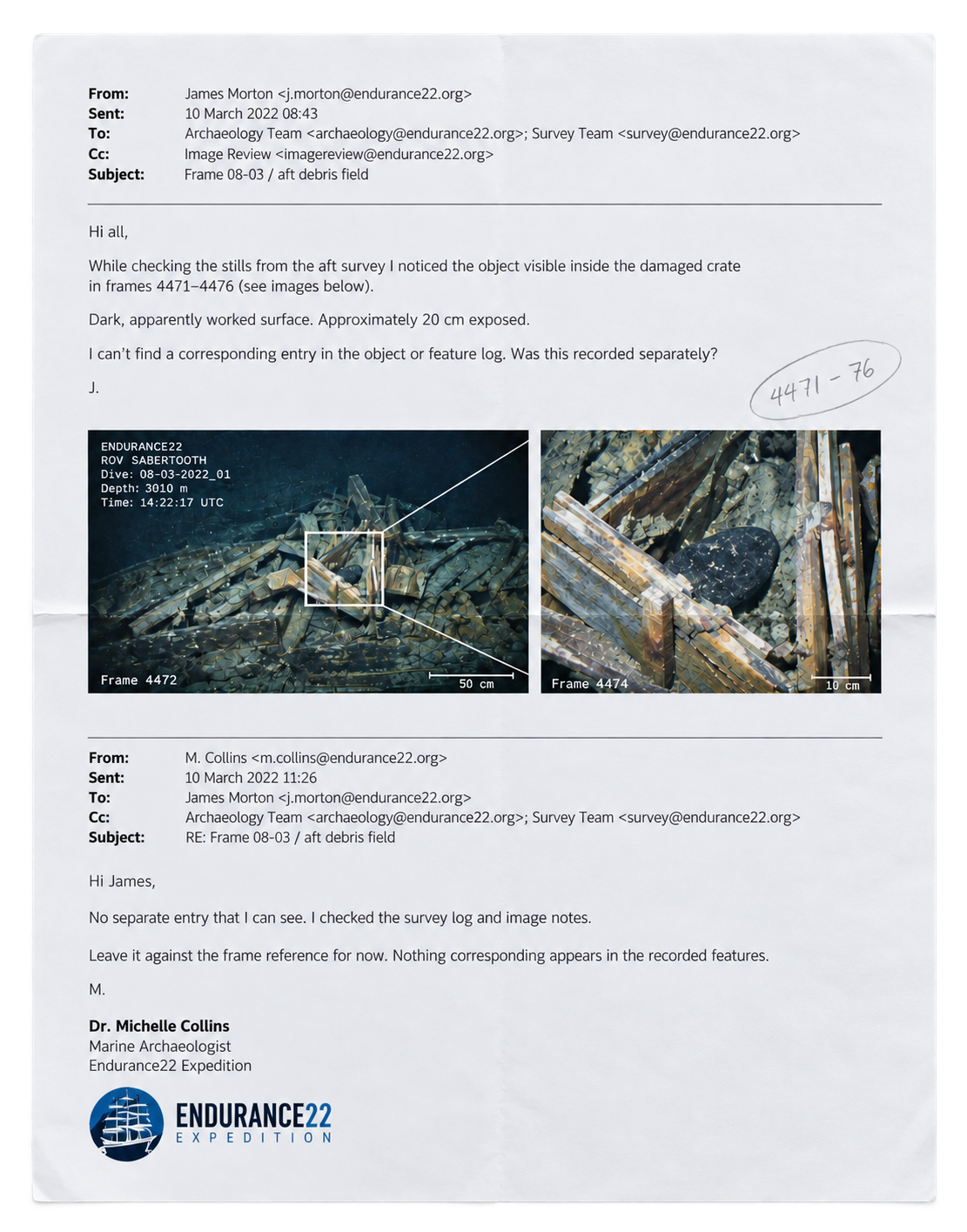
View document
[email describing an object photographed in a broken crate, and its absence from any subsequent record.]
Chronoliths is a group of black stoneware objects made in the long shadow of the marks, monuments, and material traces that survive from deep prehistory.
Across cave walls, worked bone, stone, and landscape, signs persist long after the systems of meaning that produced them have disappeared. We can locate them, classify them, compare them, count their recurrence. We can say a great deal about them. What they meant remains largely—if not entirely—beyond reach.
And will almost assuredly remain so.
The Chronoliths begin there and move elsewhere. Each was carved with the aid of a ten-thousand-year-old stone blade and inscribed with signs drawn from the recurring symbolic repertoire of the Upper Palaeolithic. They are contemporary objects carrying very old marks: deliberately displaced things that collapse archaeological time into the present.
The work is concerned less with recovering a lost meaning than with what survives when meaning is gone—the persistence of the sign, the authority of the object, and our continuing impulse to read significance into matter that refuses to explain itself.
In the archives, these eight Chronoliths are associated with reported world-wide recoveries between 1931 and 2022, from Mont Lozère to the Weddell Sea. Their circumstances of discovery vary widely, and none offers a secure account of what the objects are or how they came to be there.
HAUK and the sonic stratum
During its creation, each Chronolith was paired with a “shadow artefact”: a sonic object by the St Petersburg-based award-winning producer and musician HAUK that does not describe, translate, or decode the stone, but echoes its presence at a tangent—materially adjacent, semantically useless.
More about HAUK and his work is available.
Peter Shoemaker / atelier tushu
Artist, writer, and researcher based in rural Normandy, France.
ateliertushu.fr · contact